The Edinburgh Tenement Renovation Guide

There's a smell that hits you when you open the door to a neglected Edinburgh flat for the first time.
Decades of damp
Mould
Somehow nostalgically smells like your gran
Not ideal.
But behind the depressing decor you can often find gems! Solid stone walls, original cornicing, and ceiling heights that modern developers would happily fight someone for. An Edinburgh flat renovation is one of the best investments you can make, but only if you do it properly.
I've spent over a decade managing construction projects and designing interiors across the city. I've seen every shortcut, botch job, and "just paint over it" decision going. This guide is everything I wish someone had handed me before my first tenement project.
Know What You're Actually Buying
Before you even think about paint colours, you need to understand what sits behind those walls.
Edinburgh tenements were built between roughly 1760 and 1920, and the construction varies wildly depending on the neighbourhood. A main-door Marchmont flat from 1900 is a completely different beast from a top-floor Leith tenement built in the 1870s. The earlier buildings tend to have thicker walls (600mm+ of solid stone isn't unusual), timber lath-and-plaster internal walls, and original features that are either beautifully intact or comprehensively butchered by previous owners.

Your first job is a proper survey. Not the mortgage valuation your lender insists on, a full building survey. Expect to pay £300–£800 depending on the size of the flat. Worth every penny.
You're looking for structural movement (cracking around lintels, bowed walls, sagging floors), damp (rising, penetrating, and condensation - Edinburgh properties can easily deliver all three), roof condition (if you're top floor, this is your problem whether you like it or not), the age of the electrics and plumbing (anything pre-1980s almost certainly needs replacing), and the state of factoring and common repairs.

That last one catches people out constantly. You might buy a flat at a decent price, only to discover there's a £15,000 common repair bill heading your way for a new roof or stonework. Check the title deeds and speak to the factor before you commit!
Setting a Realistic Budget for Your Edinburgh Tenement Renovation
Here's where most people's plans collide with reality.
The average cost of a full Edinburgh flat renovation to rewire, re-plumb, new kitchen, new bathroom, redecoration throughout - sits between £45,000 and £85,000 for a two-bedroom tenement flat. Strip it back to a shell and reconfigure the layout? You're looking at £70,000 to £120,000+, depending on specification. (Guide costs unless you plan to have a gold bathroom and marble everywhere).
Those numbers make some people's eyes water. But break it down and it starts to make sense.
A full rewire runs £4,500–£7,000.
New central heating and plumbing, £5,000–£9,000.
Kitchen supply and fit, £8,000–£20,000.
Bathroom supply and fit, £5,000–£12,000.
Plastering throughout, £3,000–£6,000.
Joinery - skirting, architraves, doors - £3,000–£7,000.
Decoration, £3,000–£6,000.
Flooring, £2,500–£8,000.
Now add a contingency of 15–20% on top. Every Edinburgh flat renovation throws up surprises. The joist that's been quietly rotting for forty years. The lead pipe hidden behind the boxing. The asbestos Artex on the ceiling that nobody mentioned. Budget for it now and you won't be panicking later.
One thing that rarely makes it into online cost guides: the floor you're on matters. Ground-floor flat? Standard pricing. But every floor above that adds a percentage to your labour costs (typically 5–15% per level) because every bag of plaster, every sheet of plasterboard, every radiator and kitchen unit is getting carried up a communal stair by hand. There's no goods lift in a Victorian tenement. A fourth-floor Marchmont flat can easily cost 20–30% more in labour than the identical job at ground level, purely because of access. Some trades will quote it as a line item, others just bake it into a higher day rate. Either way, factor it in early or your budget's fiction before the first hammer swings.
Where to Spend and Where to Save
Spend on anything behind the walls. The rewire, the plumbing, the damp treatment, the insulation - these are the bones of the project. Cutting corners here always costs more in the long run.
Save on cosmetic finishes where you can be clever about it. A well-chosen porcelain tile from Topps Tiles at £35/m² can look just as sharp as a £90/m² natural stone if the layout and grouting are done well. Howdens kitchens with upgraded handles and worktops punch well above their weight. And a decent painter who takes their time is worth more than the most expensive Farrow & Ball colour card.
If you plan to DIY and manage the renovation yourself, check out our Edinburgh Renovation Budget Planner on Etsy. It will help keep things on track and ensure you're not overspending.
Planning Permission, Listed Buildings, and Conservation Areas

Edinburgh has more listed buildings per square mile than almost anywhere in the UK. If your flat is in a listed building, and a huge number of New Town, Old Town, and Stockbridge properties are, you need Listed Building Consent for any changes to the building's character. That includes internal alterations if they affect original features.
Even if you're not listed, there's a good chance you're in a conservation area. That means permitted development rights are more restricted, particularly for anything visible from the street - windows, doors, roof lights etc.
The Edinburgh Council planning portal is your friend here. Check your property's status before you start dreaming about knocking through walls or adding a Velux. A planning application runs £300–£600 depending on the work, and processing takes 8–12 weeks on average. Factor that into your timeline.
For most internal Edinburgh flat renovations, you won't need full planning permission. But a Building Warrant is a different matter. In Scotland, Building Standards (not Building Regulations, that's England and Wales) apply to structural alterations, electrical work, drainage changes, and window replacements. A Building Warrant application costs are depending on the total costs of the warrantable work. You can check the indicative price using the Fee Calculator.
Don't skip this. It will come back to bite you when you try to sell.
Getting the Layout Right
This is where good design earns its money.

The typical Edinburgh tenement layout has long hallway, rooms off either side, kitchen at the back, bathroom shoe-horned in at some point in the 1960s, works fine if you keep it. But there's almost always a smarter arrangement hiding in the floor plan.
The most common move is opening the kitchen into the living space. In a tenement, the kitchen was originally a separate room (often with a press, a pulley, and not much else). Knocking through to create an open-plan kitchen-living space transforms how the flat works. More light, better flow, and a layout that actually suits how people live now.
A few things to watch.
Load-bearing walls. The external walls and the central spine wall are structural. Internal partition walls are usually timber stud with lath and plaster - removable, but only with a structural engineer's blessing. Get a proper assessment (£300–£500 for a structural engineer's report) before anyone picks up a sledgehammer.
The hallway. Edinburgh tenement hallways are famously long and dark. However, resist the urge to lose them entirely - they're genuinely useful for storage, coat hooks, and keeping the heating bill manageable. Instead, borrow space from them. Widen a doorway. Add glazed internal doors to pull light through. Steal 300mm for a utility cupboard.
The bathroom. Most tenement bathrooms are tiny afterthoughts. If you're reconfiguring, consider swapping a bath for a walk-in shower (1200×800mm is the sweet spot for comfort without eating the room), relocating the soil stack if the budget allows, or if you've got three bedrooms and can sacrifice one, creating a proper family bathroom.
If you're staring at a floor plan and can't quite see the answer, that's exactly the sort of thing an interior designer is for. At Braw House, layout reconfiguration is one of the first things we tackle in any project. It's the foundation everything else is built on. Give us a shout if you want a second pair of eyes on yours.
Kitchens: The Room That Sells the Flat
Your kitchen will be the single most expensive room in the renovation, and it's the one buyers (or you, every single morning) will judge hardest.

For an Edinburgh tenement kitchen, you're usually working with a room that's around 3m × 3.5m. Tight, but workable. The key is maximising worktop space and storage without making it feel like a galley on a submarine.
Supplier Options Worth Knowing
For carcasses, you've got four solid options that'll do the job well. Howdens (trade-only, accessible through your joiner), Wren Kitchens, IKEA, and B&Q all produce reliable, square units that'll last.
Where they differ is the finish. Wren takes the lead on door fronts and overall presentation, their showrooms are slick and the design service is included. Howdens sits close behind with a strong range, and the stock availability in Edinburgh is hard to beat. Expect to pay £4,000–£8,000 supply only for a Howdens kitchen, £5,000–£10,000 for Wren.
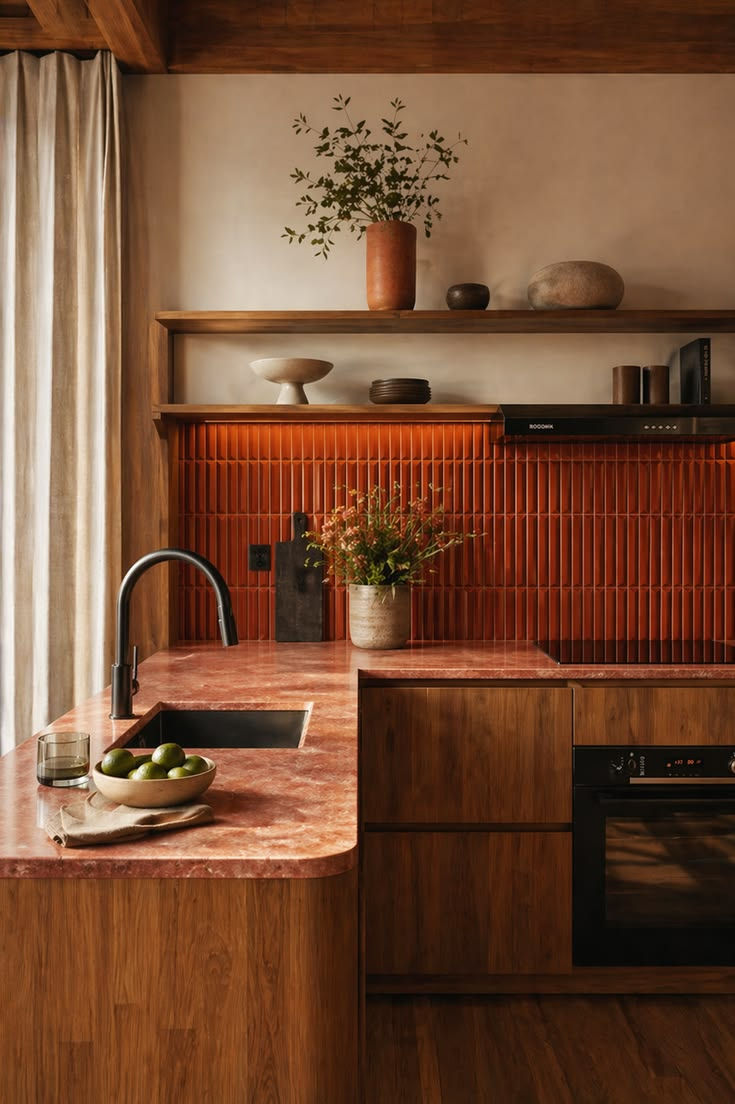
How to create something truly unique? Budget for solid carcasses from any of the above, then upgrade the fronts. Companies like Plykea, Husk, and Naked Kitchens manufacture premium doors and drawer fronts designed to fit standard carcasses. Solid timber, fluted details, painted finishes that actually feel like something when you run your hand across them. It's how you get a kitchen that looks bespoke without the bespoke price tag.
Then spend proper time on the handles. This sounds minor but it isn't. Handles are the thing you touch twenty times a day, and a flimsy, lightweight pull will kill any sense of quality stone dead. Corston do beautifully engineered knurled and smooth brass hardware. deVOL have a phenomenal range if you're after something with a bit of character. Budget for the handles and it'll transform how the whole kitchen feels under your fingers.
If the budget stretches further, bespoke joinery is the top tier. A local Edinburgh joiner building custom cabinets gives you something nobody else has — every millimetre used, every detail yours. Expect £12,000–£25,000+ supply and fit.
All of those prices are without the worktop, which is its own line in the budget. Quartz (Silestone, Caesarstone) sits around £250–£400 per linear metre installed. Solid timber (oak, walnut) is warmer and cheaper at £80–£150 per linear metre but needs ongoing maintenance. Laminate has come a long way — Egger and Formica's higher-end ranges are genuinely convincing at £40–£80 per linear metre.
Shop the Look: The Modern Tenement Kitchen
A kitchen that nods to the building's character without feeling like a museum piece.

Shaker-style units from Wren. They have 8 colours to choose from but to get that extra dose of luxury, consider repainting it a colour to complement the scheme.
The colour scheme here is from Farrow & Ball: Matchstick from the units and Wimborne White for the wall panels.
The wall panels are from Nature Wall. Again, install and paint to suit your design.
Some indivudual pieces like the wall shelf adds more interest rather than a blocky kitchen unit. Less is more!
The flooring is solid ash from Urbane Living. It doesn't get much more luxurious than solid timber flooring. However, just factor in some annual maintenance if you decide on this...
Finally, a wine cooler is not only for the rich and famous. Especially something narrow like this one from Town Tools.
Bathrooms: Small Rooms, Big Impact
Edinburgh tenement bathrooms are almost always the smallest room in the flat. They also take the hardest beating. A well-designed bathroom renovation can completely shift how a flat feels.
If you've got the ceiling height (most tenements give you 2.8m+), use it. Floor-to-ceiling tiling in a large-format porcelain (600×1200mm minimum) makes a small room feel twice the size.
For sanitaryware, you genuinely don't need to spend a fortune. Crosswater, Roper Rhodes, and Burlington (for a traditional look) all offer quality that'll last. A full bathroom suite, WC, basin, shower or bath, brassware, can be sourced for £1,500–£4,000 depending on the spec.
Walk-in showers with frameless glass screens are the single best upgrade for a tenement bathroom. A 1200×800mm tray, frameless screen, and thermostatic shower (Hansgrohe or Aqualisa) will set you back £1,200–£2,500 all-in. Small investment for a room that suddenly feels like a boutique hotel.
Shop the Look: The Boutique Tenement Bathroom

For that Vicorian aesthetic in your Edinburgh tenement, you can't go wrong with the toilet from Lusso.
Similar to the kitchen, the same wall panels are used here painted in a colour to compliment the tiles. Much easier doing it that way than finding the tile to suit the walls.
Checkered floor tiles are timeless for a Victorian style bathroom. Even opting for something with a bit more character like the Chelsea Red Mix.
Some brass hardware throughout elevate the space and give it that extra wow factor. There are thousands of options to choose from in this department so make sure you see them in person, if you can.
Finally, some vintage ornate pieces like the oak stool add some life into the space. You can find lots of interesting pieces on Etsy.
Floors, Doors, and the Details That Matter
The stuff that doesn't make it onto mood boards is often the stuff that makes or breaks a renovation.
Flooring. If you're lucky, there are original pine floorboards under the carpet. Sand and seal them with Osmo Polyx-Oil (around £45 for 2.5L, covers ~30m²) and they'll look stunning. If the boards are too far gone, engineered oak is the gold standard - Woodpecker Harlech or Ted Todd do beautiful ranges from £45–£80/m². For kitchens and bathrooms, luxury vinyl tile (LVT) from Karndean or Amtico gives you the look of natural materials with zero maintenance, from £35–£60/m² fitted.
Doors. The original four-panel Victorian door is one of a tenement flat's best features. If they're still there, strip them, repair any damage, and rehang them on quality ironmongery. If they've been replaced with hollow flush doors at some point (and they usually have) budget for solid replacements. XL Joinery and Deanta do good Victorian-style panel doors from £80–£150+ each.
Cornicing and ceiling roses. If the originals are intact, protect them at all costs. If they've been lost, Plaster Mouldings Direct can reproduce period profiles. A full room's cornicing can run £300–£800 depending on the profile and room size.
Lighting. This is the one area where most DIY renovators fall short. A single central pendant does nothing for a room. Layer it: recessed downlights for ambient light. Corston or Heals are solid wall lights or picture lights for accent, and table or floor lamps for warmth. Plan your lighting layout before the rewire - it's a hundred times easier to move a cable in an open wall than to chase one out later.
Choosing the Right Trades
Your renovation is only as good as the people doing the work. Edinburgh has some brilliant tradespeople and some absolute cowboys.

Personal recommendations trump everything. Ask neighbours, ask friends, ask on the local community Facebook groups. MyBuilder can work, but vet everyone. Check reviews, ask for recent references, and visit a current or recent job if possible.
Get three quotes minimum. Not to find the cheapest but to calibrate what's reasonable and weed out anyone who's either taking the mick or pricing too low to do the job properly. Check insurance and accreditations too. SELECT-registered for electricians, SNIPEF for plumbers, and public liability insurance for everyone. Don't be shy about asking. The good ones will have it ready.
A main contractor who manages all trades will cost 15–25% more than managing trades yourself, but if you're working full-time or this is your first renovation, it's usually worth it. The coordination alone, making sure the plasterer isn't booked for the same week as the electrician, will save you weeks of delays and a lot of headaches.
The Timeline Nobody Tells You About
A full Edinburgh flat renovation for a two-bed tenement (strip-out and refit) takes 12–20 weeks from keys-in-hand to moving your furniture back. That's assuming your trades are lined up, your materials are ordered in advance, and nothing catastrophic appears behind the walls.
A rough sequence looks like this.
Weeks 1–2: Strip-out, structural work, any layout changes.
Weeks 3–5: First fix - electrics, plumbing, heating.
Weeks 5–7: Plastering, screeding, drying time. Don't rush this - damp plaster under paint is a disaster waiting to happen.
Weeks 7–10: Kitchen fit, bathroom fit, joinery.
Weeks 10–14: Second fix electrics, tiling, decoration.
Weeks 14–16: Flooring, snagging, final clean.
Add two to four weeks for the inevitable supply delays, diary clashes, and drying time that Scottish weather demands. This can be done quicker. I've heard of a full refit being done in 6 weeks but I never seen the place myself. But, to be honest, if someone confidenly tells you they can do a full renovation in six weeks, they're either lying or cutting corners you'll be paying for later.
A Final Word
An Edinburgh flat renovation isn't a weekend project. It's a proper undertaking. But get it right and you'll have a home that's as solid as the day it was built, designed for how you actually live, and worth significantly more than what you paid for it plus the renovation cost combined.
The bones are already there. The high ceilings, the stone walls, the proportions that no new-build developer can replicate. Your job is to strip away the decades of bad decisions and let the building do what it was always meant to do.
If you want help making that happen, from initial layout planning through to the last light switch, give us a shout. No fluff, no mood boards full of things you can't actually buy. Just practical, sharp design that works in the real world.
Chris is the founder of Braw House, an Edinburgh-based interior design studio specialising in residential and hospitality projects. With over a decade in construction management and high-end interiors, he brings a hands-on, no-nonsense approach to every project.



rr88m1 com mình vừa mở trên điện thoại và trang vào khá nhanh, kéo lên xuống thấy phản hồi ổn. Bố cục chia khối nhìn thoáng, chữ dễ đọc, nên mình lướt một mạch vẫn theo kịp nội dung mà không phải dừng lại căn chỉnh. Có đoạn họ nhắc hệ thống game hơn 1.000 thể loại nên phần danh mục nhìn nhiều, nhưng cách sắp xếp vẫn ngay ngắn và không làm mình mất phương hướng (mình chỉ xem sơ qua thôi). Mình cũng thích việc họ để riêng mục nói về nguồn gốc và pháp lý, kiểu ai cần kiểm tra thì thấy liền chứ không phải đào sâu trong mấy trang con. Thanh menu đặt chỗ dễ…
Mình cũng thuộc kiểu hay xem dự đoán cho biết thêm thôi, coi như một nguồn tham khảo để đỡ phân vân chứ chẳng bao giờ đặt niềm tin 100%. Hồi trước mình còn thử ghi chép lại vài bộ số thấy người ta nhắc nhiều, rồi đối chiếu lại kết quả, cuối cùng nhận ra chuyện đúng sai vẫn hên xui như bao cách khác. Gần đây mỗi khi đọc soi cầu miền bắc hôm nay mình thường tự chọn lọc lại, ưu tiên những nhận định có lý do rõ ràng, tránh mấy kiểu nói cho có hoặc đoán theo cảm giác. Mình đánh giá cao những bài viết nói thẳng là có rủi ro và nhắc giữ…