The Complete Guide to Interior Design Costs in the UK (2026)
How much does interior design actually cost in the UK? Here's the honest breakdown from a designer who's also managed the construction side - no vague "it depends" answers, just real numbers.

So, you've finally decided to do something about that living room. Or maybe you've just picked up the keys to a new place and the previous owner's taste in artex ceilings and tartan carpets has you reaching for a professional. Either way, the first question is always the same: how much is this going to cost me?
The problem is, most interior design cost guides online are written by people who've never actually run a project. They give you ranges so wide they're useless. I've spent over a decade managing renovations and designing interiors across Edinburgh and beyond - and I'm going to give you the actual numbers, with context, so you can plan properly.
What's in This Guide
What Do Interior Designers Actually Charge in the UK?

Let's start with the designer's fee itself before a single tin of paint is opened. Interior designers in the UK typically charge in one of four ways, and the method matters because it dramatically affects your total spend.
Flat fee per room: The most common model for residential projects. Expect to pay between £500 and £3,000 per room depending on the designer's experience, your location, and the scope of work. In Edinburgh and other Scottish cities, you're typically looking at the £750–£2,000 range. In London, add 30–50% on top.
Hourly rate: Ranges from £50 to £200+ per hour. Junior designers and those outside London tend to sit around £50–£80/hour. Mid-level designers in cities like Edinburgh, Manchester, or Bristol charge £80–£120/hour. London and high-end specialists can hit £150–£250/hour. Always ask for a total-hours estimate before agreeing as hourly costs can spiral fast.
Percentage of project spend: Some designers charge 10–20% of your total renovation budget. On a £30,000 kitchen renovation, that's £3,000–£6,000 in design fees alone.
Fixed project fee: A single quoted price for the entire design scope. It gives clients cost certainty from day one. For a full design service covering concept through to completion, expect £2,500–£15,000 depending on the number of rooms and complexity.
The Hidden Costs Most Interior Design Guides Don't Mention

The designer's fee is rarely the biggest cost. It's usually 8–15% of your total project spend. The real money goes on:
Construction and trades: A bathroom renovation currently runs £6,000–£15,000. A full kitchen renovation sits at £15,000–£40,000 for a mid-range finish. A whole-flat renovation in Edinburgh (2-bed tenement) ranges from £40,000–£90,000.
FF&E (Furniture, Fixtures & Equipment): Sofas, beds, lighting, curtains, rugs, accessories - everything that isn't nailed down. A full living room refresh with quality mid-range furniture: £5,000–£15,000. A whole house: £15,000–£50,000+ is realistic.
The 15–20% contingency you must build in: Every renovation uncovers surprises. I've never managed a project that didn't need contingency spend. Budget 15% minimum; 20% if your property is pre-1920.
These figures include design, construction, and furnishing at a mid-range quality level - not cheapest builder's grade, not luxury-magazine fantasy.
Interior Design Cost by Room: Realistic UK Figures
Let me break this down room by room. These figures include design, construction, and furnishing at a mid-range quality level, not builder's-grade cheapest, not luxury-magazine fantasy.
Kitchen

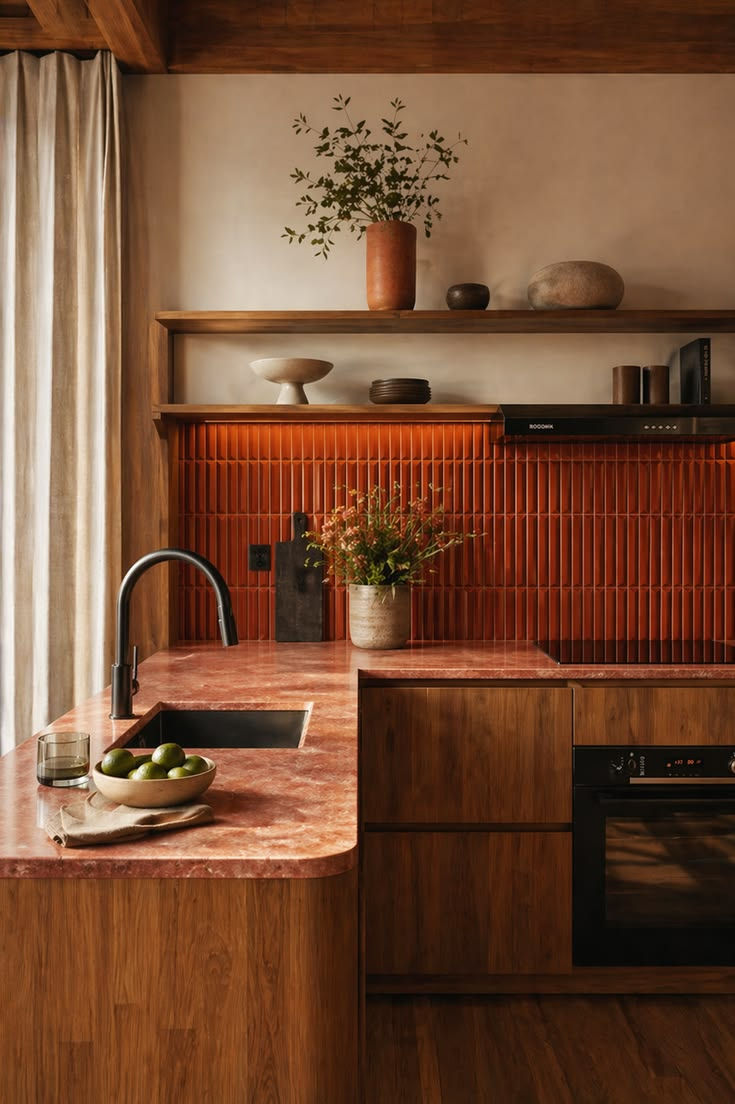
The kitchen is almost always the most expensive room in the house to renovate, because it involves every trade: plumber, electrician, joiner, tiler, plasterer, and usually a gas engineer.
Budget refresh (new doors, worktops, splashback, appliances, keeping existing layout): £5,000–£12,000
Mid-range full renovation (new layout, units, appliances, flooring, lighting): £15,000–£35,000
High-end full renovation (bespoke units, stone worktops, premium appliances, architectural lighting): £35,000–£70,000+
The biggest cost driver is layout changes. Moving the sink means moving plumbing. Moving the hob means moving gas and extraction. Every layout change adds £1,000–£3,000 in first-fix trades costs before you've even chosen a cabinet.
Bathroom

Budget refresh (new suite, tiles over existing, updated fixtures): £3,000–£6,000
Mid-range full renovation (strip to brick, new layout, quality tiles, underfloor heating): £8,000–£15,000
High-end (wet room, large-format porcelain, walk-in shower, designer fittings): £15,000–£40,000+
Pro tip: underfloor electric heating in a bathroom can be cost-effective and adds enormous comfort and perceived value. It's one of the best pound-for-pound upgrades you can make.
Living Room

Living rooms are typically the cheapest room to transform because they rarely need trades work - it's mostly decoration and furniture.
Redecoration only (paint, curtains, lighting, accessories): £1,500–£4,000
Full redesign (new flooring, fireplace update, built-in joinery, all new furniture): £8,000–£20,000
Premium overhaul (bespoke joinery, statement lighting, designer furniture): £20,000–£50,000+
Bedroom

Refresh (paint, new bedding, lighting, soft furnishings): £1,000–£3,000
Full redesign (fitted wardrobes, new flooring, curtains, all furniture): £5,000–£15,000
Master suite with ensuite (combined bedroom + bathroom renovation): £15,000–£35,000
Hallway & Entrance

The most overlooked space in the house and often the cheapest to transform with maximum impact.
Quick refresh (paint, new lighting, runner, hooks/storage): £500–£2,000
Full redesign (new flooring, built-in storage, feature wallpaper, lighting scheme): £3,000–£8,000
How to Budget for an Interior Design Project
Here's the framework I use with every Braw House client:
Step 1: Define your scope. Which rooms? What level of intervention? Full gut renovation or cosmetic refresh? Be honest about what you actually need versus what Pinterest has convinced you to want.
Step 2: Get your construction costs quoted first. Before engaging a designer on the full scheme, get ballpark quotes from 2-3 builders for the construction work. This anchors your budget in reality.
Step 3: Apply the 60/25/15 rule. As a rough guide, allocate your total budget as:
60% construction and trades
25% furniture, fixtures, and equipment (FF&E)
15% design fees, contingency, and sundries
So a £50,000 total budget would be roughly £30,000 construction, £12,500 FF&E, and £7,500 for design fees, contingency, and incidentals.
Step 4: Add 15-20% contingency ON TOP of your comfortable budget. If your comfortable spend is £40,000, your real budget should be £46,000–£48,000.
When Is an Interior Designer Worth the Money?
Honestly? Not always. If you have a clear vision, simple requirements, and are decorating rather than renovating, you might not need a designer. But there are scenarios where a designer pays for themselves:
When you're changing layouts - An experienced designer will spot spatial efficiencies that add value and avoid costly mistakes. I've saved clients thousands by catching impractical layouts at the drawing stage that would have cost a fortune to fix mid-build.
When you're spending over £20,000 on construction - At this level, a designer's fee (typically 8-12% of project cost) is more than offset by the value they add through smarter specification, trade coordination, and avoiding expensive mistakes.
When you're time-poor - Managing a renovation is essentially a part-time job. If your time is worth more than the designer's fee, outsource it.
When you want a cohesive result - The difference between a professionally designed space and a DIY effort usually isn't any single decision, it's the hundred small decisions that all work together. Lighting, colour, texture, proportion, flow. That coherence is what you're paying for.
Tools to Help You Plan and DIY
If you're in the early planning stages, these tools can help you get organised before engaging a professional:
A good measuring tape and graph paper - or the free Magicplan app for creating floor plans on your phone.
A physical sample board - collect paint swatches, fabric samples, and tile offcuts before committing to anything. Screens lie about colour.
A renovation budget spreadsheet - track every quote, receipt, and variation in one place. The projects that go over budget are always the ones where nobody was tracking the numbers.
What to Look for When Hiring an Interior Designer
A few things that separate the professionals from the Pinterest enthusiasts:
Portfolio of completed projects - not just mood boards and 3D renders. You want to see real, built, photographed spaces.
Clear pricing structure - any designer who can't give you a straight answer on their fees should raise a red flag.
Construction knowledge - ask them how they handle snagging, or what they'd do if a contractor found unexpected asbestos. Their answer tells you whether they've actually managed projects or just picked fabrics.
Insurance - professional indemnity insurance at minimum. If they're specifying structural changes, they should carry appropriate cover.
Chemistry - you'll be working closely with this person for weeks or months. If the initial consultation feels awkward, it won't improve.If you're in Edinburgh and want to talk through your project, [you can book a consultation with Braw House here]
The Bottom Line
Interior design in the UK costs less than most people fear and more than most budgets assume. The key is planning properly, building in contingency, and being honest about your priorities. A well-managed £30,000 renovation will always look better than a chaotic £50,000 one.
" The most expensive mistake isn't hiring a designer - it's starting a renovation without knowing what you're getting into."
Chris is the founder of Braw House, an interior design studio based in Edinburgh. With over a decade of experience in construction management and high-end residential design, he specialises in making beautiful spaces that actually work.
Get in touch to discuss your project.



Mình mua xổ số chủ yếu cho vui, kiểu giải trí nhẹ nhàng thôi nên thường xem kết quả như một thói quen, chứ không đặt nặng chuyện đổi đời. Trước đây nghe bạn bè bàn về “cầu kèo” này kia, mình cũng thử để ý xem có gì hay ho không, rồi nhận ra đôi lúc có vài chi tiết lặp lại khiến mình tò mò. Mỗi khi đọc mấy lời nhận định, mình hay ghi lại vài con để tự kiểm tra, xem có phải mình đang bị cảm giác “đúng rồi đó” dẫn dắt không. https://soicauxsmb.io/lo-khung-song-thu-3-ngay.html thỉnh thoảng mình lướt qua để có thêm chuyện nói với tụi bạn. Trúng chút thì vui thật, nhưng sai cũng…